Find my articles here:
Placeholder post title
Placeholder post title
Placeholder post title
Placeholder post title
August 21, 2026
In recent years I was fairly stuck in my work and career, and perhaps in my entire life, really. And as time progressed, I felt increasingly powerless, which gave me quite an unpleasant feeling, I can tell you.
More and more cramped in my body, I fell into a vicious circle. Gradually, the feeling grew more intense, up to and including panic attacks.
So what to do: yoga, meditation, and therapy. You may know the litany and lingo. It's sort of becoming an epidemic.
And then AI came along on top of that. If AI is good at anything, it's coding. I actually found that okay, since I was pretty fed up anyway.
But to be honest, I still find it enjoyable to code and create, and I also find AI quite impressive in what it can do and in working with it. Add to that the fact that we're living in truly historical times, so plenty of reasons to consider how I should relate to AI. Something many others will have to deal with, I think, or maybe even fear.
After working for more than 25 years as a developer across various industries — from startups in the automotive industry to landing pages for ad campaigns and mobile apps in healthcare — I'm able to make a decent estimate of what's needed to develop a new platform, for example. From branding to database modeling. From mobile app development to DevOps and infrastructure. I feel exactly like what Cory Doctorow describes as the "Centaur."
In a matter of days I hammer out a complete platform that a few years ago would have required entire departments.
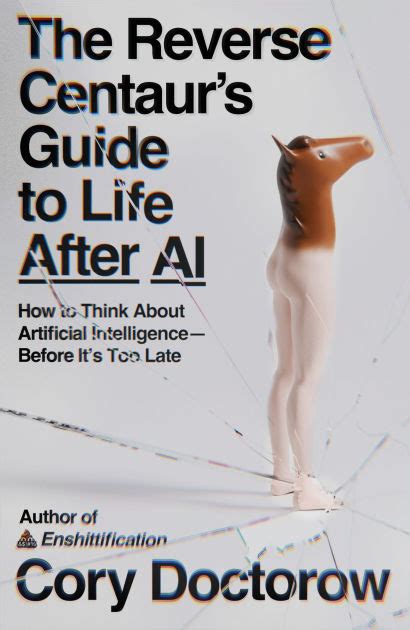
Cory Doctorow's "Centaur" — a good description of how I've come to work with AI.
Still, I needed something more to move forward. To get out of that cramp. Working for a startup or doing consultancy work hasn't exactly become more enjoyable in recent years. It's mainly the many meetings that kill it. Daily stand-ups, sprint planning, tech meetups, merge requests — man, man, man, it started sucking away my energy and creativity.
Furthermore, there's the concerning growth of big tech companies, social media, and AI companies led by CEOs who don't take privacy, society/humanity, and the environment too seriously.
Nor does the simple goal of "making money, so we can go on vacation" work for me anymore.
As you get older, you gain more perspective on what the digital landscape looks like now and the role you play in it. Only after reading Carissa Véliz's book did I realize what I needed.
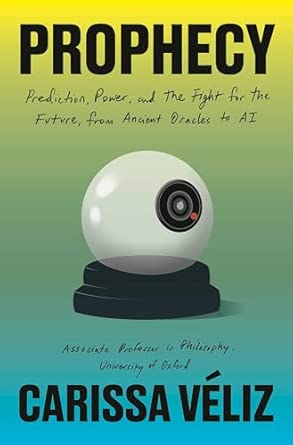
The book that handed me the ethical framework I'd been missing.
What I needed was ethics. A framework within which I operate. Within this framework, I can deploy my skills and insights, and I'm surprisingly finding a sense of satisfaction that I've been lacking for the last few years.
I worry enormously about the power that these massive tech companies wield, and the influence of their algorithms on society, and the pressure democracy has come under.